Integrating expertise: Predicting hazardous weather through convergence
Please sign in to access your itinerary, materials and links to all your sessions.

| Primary Contact: |
| Contact NSF NCAR Explorers |
Google | Outlook | Outlook.com (Office 365) | iCal | Other


Integrating expertise: Predicting hazardous weather through convergence science and artificial intelligence
The U.S. National Science Foundation National Center for Atmospheric Research (NSF NCAR) invites you to the Mesa Lab for an Explorer Series lecture, “Integrating expertise: Predicting hazardous weather through convergence science and artificial intelligence” on Wednesday, April 8th from 7:00-8:30 pm (MT).
This event will be a live hybrid webcast with options to attend in person at the NSF NCAR Mesa Laboratory or virtually. Please register and tell us if you will be attending in person or online. This will allow you to receive email reminders. All attendees will receive an email with the link to the webcast and details on how to participate.
Event Summary
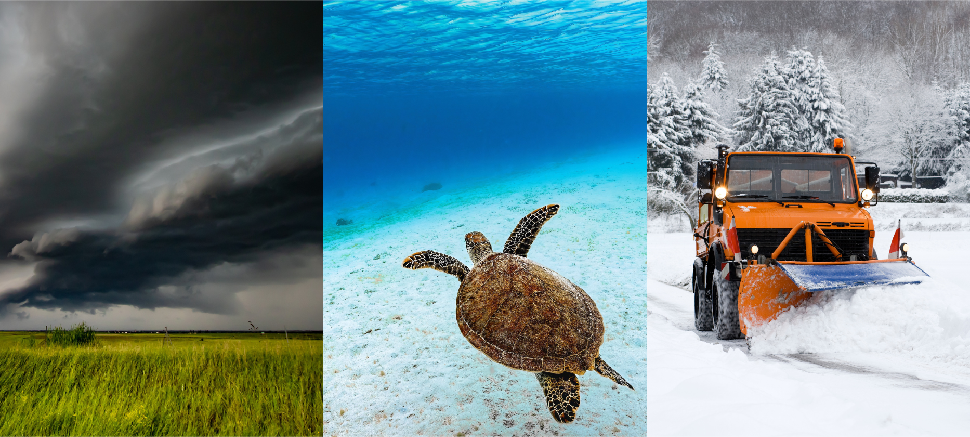
Hailstorms and turtles and snow…oh my! Imagine you’re a National Weather Service forecaster preparing to warn about a coming hailstorm. Or maybe you’re a sea turtle conservationist on a mission to protect these marine reptiles from looming cold weather. You could even be a New York State Department of Transportation specialist deciding between jumping into the snow plow or salt truck. What information does NSF NCAR provide to make these critical decisions?
In this Explorer Series lecture, Mariana Cains shares what convergence research is and showcases how researchers use AI to address societal needs and predict hazardous weather across a medley of hazards and decision-makers. Mariana will explain how researchers at NSF NCAR and collaborators from across the country and disciplines work in integrated teams to better understand how and why these critical decisions are made and to develop information and tools that are both useful and used by decision-makers.
This is a free public event recommended for ages 12+
This event is brought to you by the Education, Engagement & Early-Career Development (EdEC) team. Learn more on our website. For more information about public engagement and to watch archived lectures, visit the NSF NCAR Explorer Series webpage.
We look forward to seeing you there!
